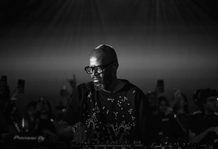
We sat down with one of the strongest trailblazers of Dance music for a chat.
It’s not every day that you get the chance to talk with Andrew Bayer, the author of countless Dance records across 20+ years, four artist albums (now five), and trend-defying sounds spanning Trance, Electro, Ambient, Electronica, and so much more to his own name, alongside so many records co-produced for the greatest names out there. Just to name a few, Above & Beyond, and Armin van Buuren.
Bayer is often considered — and should be if you don’t see him that way already — one of the true trailblazers of the Anjunabeats sound, and the slower, tinted-with-Electro Progressive Trance sound as well, marrying soothing, fly-away sounds with absolutely bestial growls and saws. Don’t believe me? Nine case-in-point mentions below.
Think of songs such as ‘Counting The Points’, ‘One Last Look’ as Signalrunners, or ‘Nothing Ever Lasts’ with Cosmic Gate. Now think of ‘England’, ‘To The Six’ with Boom Jinx, and ‘In And Out Of Phase’ with Matt Lange. Now think of ‘From The Past’, ‘Gaff’s Eulogy’, and ‘Celestial’. All of these, ALL OF THEM, are absolute diamonds of the history of Dance music. And they are all his. I could go on naming records but that proves my point already.

Last Friday, Bayer released his fifth artist album, A Light That Guides Weary Travellers Home, on Seven Lions’ Ophelia, marking a new chapter in his career, one in which he’s found a home outside Anjunabeats, his former home for decades, to venture out into a tangential space where feels are equally as welcome, just in a different container. The album is phenomenal, as you’d know after reading our review of it, and, well, we also landed a tiny little interview with the author of the piece himself!
We teased this a little during our review, and we’re so happy to put out this exclusive chat, which, as all our good interviews in here, turned into a sincere, heart-open conversation very quickly. You’ll get to know so much more about Mr Bayer, ranging from his views on life and music, how this album almost never happened, what these last years have meant to him, and you’ll even take home his favourite albums of all time to take home with you. If I keep teasing, it’s filler. Ladies and gentlemen, our interview with Andrew Bayer. Enjoy.
The Interview
(Please note, the bolded text represents a question, while the paragraph(s) following it represent Andrew’s answers.)
First off, massive congratulations on the release of A Light That Guides Weary Travellers Home. Would you mind sharing with us the story of how, why, and when this entire project came to be?
For a really long time, I was working almost exclusively with Anjunabeats, my whole life was essentially over there. But when I went on the Journey III bus tour with Seven Lions a few years ago—Jeff and I have been friends for over a decade—we started working much more closely together. That tour was such a pivotal, life-changing moment for me that I actually have “Journey III” tattooed on my leg!
I’ve always been a multi-genre artist at heart, but my live sets were historically streamlined into progressive 128 BPM electro-trance. My artist albums were explicitly designed for at-home listening, so I would create separate club mixes just to share those songs in a live setting. Perhaps the clearest example is In My Last Life / In My Next Life. Watching Jeff and the Ophelia crew build naturally multi-genre sets was a massive eureka moment. I thought, “I want to do this in my own way.” I started hanging out with the Ophelia crew much more, and they welcomed me in an incredible way. They pushed my creative boundaries and challenged me in ways I hadn’t experienced in years, encouraging me to combine my at-home album storytelling with my high-energy live sound in a cohesive way.
Historically, people were often confused by me as an artist because I operated in these two distinct lanes: non-clubby home listening and heavy club versions. Marrying those two worlds was the big creative leap for this record. On my previous album, Duality, disc one hinted at this idea, but the two sides were still separated. This time, the inspiration was to fully merge them, keeping the heartfelt, engaging songwriting while taking the energy up to eleven across multiple genres. Being surrounded by a new group of supportive friends who kept teaching me and challenging me created the perfect environment to make that happen.
You mention learning new things, which feels almost surreal because you’ve always been viewed as a technical pioneer. How do you create those moments of inspiration, and when does creativity usually strike for you?
Whenever I feel like I’ve stopped learning, I feel weighed down by it. Learning is the single most important element in keeping creativity exciting, it recaptures that raw, childlike inspiration you felt when you first started making music. When you get too comfortable, you stop growing.
This album was a massive experiment done on a purely selfish quest to challenge myself in every conceivable way. Anytime I listen back to my own discography, I can hear the moments where I was pushing myself versus when I was playing it safe. For this project, I deliberately disrupted my entire workflow. I switched DAWs to Ableton after more than 15 years on Logic, forcing myself out of my bubble even down to that very detail.
Do you remember a specific moment during the writing process where you felt like you had something truly magical in your hands?
One hundred percent. The very first song I wrote for the album was with Jonathan Mendelsohn, a track called ‘I Wish You Well’, which I initially rushed to get ready for Dreamstate a few years ago. Writing that track brought together several self-imposed challenges: adapting to Ableton, returning to 140 BPM trance, and weaving an emotional backdrop with personal storytelling.
Reconnecting with Jonathan and creating something so authentic was a massive turning point. For years, I had locked my live sets into a strict 128 BPM template. Going back to 140 BPM—which used to be my starting template when I was a teenager—made me feel like a kid again in the studio. Realizing the depth of the story we wanted to tell made me say, “Shit, there’s so much more to this. I have to do a full album.” I have to thank Jonathan massively for kicking my ass into gear, and the Ophelia crew for diving in and helping me listen through hundreds of clips and demos.
When you listen back to a demo and get that obsessive feeling where you’re proud of it and instantly need to replay it, that’s when you know you’ve created something special. I’m a selfish musician, I have to make music for myself first. If people like it, that’s amazing, and if they don’t, honestly that’s amazing too. It has to click for me internally. Even playing the same chords I’ve used throughout my career felt completely fresh once I sped them up to 140 BPM. Piano parts that didn’t work at 128 suddenly clicked at faster tempos, opening up an entirely new playground.
Does the tracklist follow a specific narrative pattern or structure, or is it ordered purely by musical preference?
I take sequencing very seriously! There are many valid ways to structure a tracklist, but for me, it was intentionally ordered from start to finish. Releasing singles during the album campaign was actually quite painful because I was sitting in limbo waiting for the full piece to drop.
I view the album as a singular piece of music structured in three distinct acts, very much like a film. Each act has its own defined progression, narratively through the lyrics, sonically, and emotionally, and it all leads to a very specific closing piece.
To be completely honest, I still struggle to listen to the last ten seconds of the album without crying.
The final piece is quite frankly amazing. How did that closing track come together?
Oh, the first time I tested the final masters right before delivery, I was weeping on stage. The very end of the album, ‘Home’ features a voice recording of me feeding my son breakfast and him repeatedly saying “hi” back to me for the first time. Originally, I had a much darker, epic piece planned for the finale, but at the last moment, I realized the ending needed to feel like a pure celebration. Gemma Hayes came in and completely blew my mind with her vocal performance, and finishing the record with that recording of my son was the only right choice. I get choked up just talking about it!
People nowadays often use the phrase “this is my most personal work to date”, so I try to avoid that cliché. But this album is easily the most important achievement of my career. The entire process was hands-on, and doing so much of it myself gave me a profound sense of satisfaction. Knowing this story is permanently cemented out in the universe means I can go to sleep happy at night. I almost don’t care about how it performs commercially. It performs beautifully for me.
Moving away from the record for a while, you’ve inspired so many producers over the years. So we’d like to ask, who inspires you? Who got you into music originally, and who do you listen to when you need creative fuel, electronic or otherwise?
In the very early days, I was making trance over dial-up internet with people around the world. I was part of a duo called Signalrunners, which was my entry point into the industry. When I was 15 years old during spring break, I literally flew to Scotland to meet our record label! Judge Jules took a liking to our Signalrunners project, and we had this insane feedback loop where we’d finish a track, send it over, and hear it played on BBC Radio 1. Experiencing that as a teenager was a massive adrenaline hit. That specific experience isn’t really possible in today’s landscape with the way streaming works and how the industry prioritizes social media content creation over music itself.

In terms of ongoing inspiration, most of mine comes from outside electronic music. Within the electronic space, Clark has been a massive influence ever since my days at Berklee. The way he pushes dissonant, detuned elements into a beautiful electronic tapestry is incredible. Outside electronic music, I sound like a broken record, but Bon Iver and Sufjan Stevens are my absolute go-tos whenever I’m at a loss for what to listen to. I was also inspired by the vocalists and collaborators I worked with on this record while putting the music together.
How I see you, and judging but what you’ve already told us, you constantly push your sound into new territory rather than staying inside one single genre or identity. Do you view that constant evolution as essential to who you are as an artist, that inability to “box” your sound?
Absolutely. If you get stuck in the same loop for too long without pushing yourself, the music becomes stale. To prevent that, I have to constantly set new technical and artistic challenges to overcome. This was, by a country mile, the most challenging record I’ve ever made.
I deliberately handled everything myself: the mixing, the mastering, learning string orchestration from scratch rather than outsourcing it, learning a new DAW, and managing the release without a traditional management team, relying instead on a wonderful group of supportive people. Those challenges keep you on your toes both creatively and within a modern music industry that can be a pretty scary place for artists right now.
To remain my most authentic self, I have to keep changing. This album is a radical shift, and I know a fair amount of trance purists might hear certain sections and say, “Oh, now he’s making dubstep!” But from front to back, the record reads as orchestral trance with moments of halftime energy that I wouldn’t even classify as dubstep. To me, those sections are deeply trancy, just a different flavor. More than a number on a screen, the essence of trance is that emotional undertone that makes you feel something. Opening up the floodgates to explore whatever tempo felt right was a massive inspiration.

Back to albums, since we’re already touching on this topic. What are albums in your eyes? I’ve talked to many who say they’re not really profitable, they’re quite unfashionable, the algorithm doesn’t like them, and so on. But yet artists keep making them and people keep consuming them. So what gives?
That perspective is a direct byproduct of a (scary) modern music industry that prioritizes rapid consumption over lasting art. Traditionally, albums were built to promote touring and generate long-term revenue. My own goals shifted quite a bit when I took parental leave to raise my son. I went dark on social media, stopped releasing music for a while, and then jumped straight into this campaign. Coming back was pretty traumatic because the industry doesn’t like artists taking time off. Your absence is noted immediately, and you’re expected to constantly sell yourself.
Historically, an artist would release an album, tour it, take a year off to write the next one, and repeat. That traditional cycle barely exists now because platforms demand constant output. But frankly, I don’t give a fuck about how the modern music industry works! People can look at my Instagram numbers or metrics, and I truly don’t care. I will always present my art in the way that authentically encapsulates who I am at the time.
After finishing Duality, which was a long, exhausting writing and touring process, I really felt lost and swore I would only release singles and EPs moving forward. But having that eureka moment with Ophelia reignited my spark. I am an album artist at heart, and this record reminded me that I will always make albums regardless of whether they are profitable or algorithmically favored.
You brought up the word “art,” which feels central to your ethos. Focusing on genuine creative expression over viral trends seems to be what keeps the process meaningful for you.
One hundred percent. I have willingly taken a hit commercially by refusing to engage in viral social media tactics or forced content creation. No shade to the people who enjoy that side of things, it’s just not for me. I enjoy writing music, feeling a deep connection to what I’ve made, putting it out into the world, and seeing what happens. The cherry on top is stepping on stage, playing music I’ve poured my soul into, turning it up loud, and dancing with people. That’s the ultimate celebration.
Social media pressure can feel completely disconnected from the actual craft of making music. It’s probably one of the things I like the least about today’s industry.
Exactly. I didn’t get into music to become a DJ or stand on stage, let alone make social media videos. Early on, I was petrified of getting on stage. But during the 2006–2012 Beatport era, seeing artists like Deadmau5 and Eric Prydz use DJing and live shows as a vehicle to present their own productions showed me a viable path forward.
When I perform now, it’s a complete release. If you’ve ever seen me play live, I dance like a total lunatic up there! By the time I step off stage, it feels like a full workout. I’m lip-syncing my lyrics, channeling drag performers, and losing my mind because it’s a moment of pure celebration. I’ve had comments online saying “he’s cringe” or “he’s doing too much,” but I don’t care.

My stage energy is heavily inspired by — and I’m so lucky to say this — seeing Kate Bush perform live in London: that time she came out barefoot in a muumuu, swaying around and completely losing herself in the music. That’s authentic self-expression. If being on stage for someone else is purely a polished photo opportunity, more power to them, but that’s not my vibe. I’d much rather look like an absolute mess on stage and genuinely feel the music.
How I see it, it’s exactly that absence of rationale, that sincere, nude madness on stage: that’s what builds a lasting connection with an audience. Call it passion.
We are currently experiencing a drought of authenticity across the industry, from AI-generated tracks topping charts to artists prioritizing content over craft. Seeing someone completely lose themselves in their work is deeply human. There’s a quiet underground community of artists and listeners who value genuine authenticity, and I firmly believe we are reaching a critical tipping point where people are getting sick of artificial content and seeking out real art again. But even if that underground never becomes mainstream, I’m equally happy remaining part of a tight-knit, authentic community. Suddenly, I’m underground!
What are your personal “comfort zone” records, the albums you return to when you need to reset yourself? Those that you can’t listen too often too so you don’t burn them out.
You are so right, you have to ration those special albums so you don’t burn them out! Bon Iver’s discography is a major seasonal comfort for me, as is Sufjan Stevens—his records Carrie & Lowell and Javelin are completely devastating, so you have to pick the right emotional moment to listen to them.
For newer music, Ignorance by The Weather Station gets played constantly in our house on the weekends; it pays a subtle, beautiful nod to Talk Talk’s experimental era and feels like a warm hug. For plane rides or for relaxation, Brian Eno’s Music for Airports and Stars of the Lid’s The Tired Sounds Of and Their Refinement of the Decline are essential for recentering. Also, A Winged Victory for the Sullen’s self-titled record is a total masterpiece that I have to save for specific, sacred moments.
Another huge record for me is Jóhann Jóhannsson’s IBM 1401, A User’s Manual. Jóhann’s work is that special kind of devastatingly beautiful. When I heard the news of his passing I was on tour in Poland. I collapsed onto the floor and sobbed, had to question how I’d go ahead with my show that night. His music really fed my approach to contemporary classical and ambient textures. If you strip back the electronic elements and heavy drums on my new album, at its core, it functions very much like a contemporary classical singer-songwriter record.
I love this question. If you could travel to the past and meet your past self, any number of years, maybe 10 years, maybe 15, 20, even more, however many you need to, what would you tell that younger Andrew? Were you worried about anything that was really not necessary?
That’s a heavy question. Growing up in the closet for a long time left me with very little self-confidence, both as a person and in my ability to contribute to the music industry. I was extremely hard on myself.
I wish I could go back and tell my younger self to believe in my own music and prioritize making music for myself. Because I lacked the confidence that I could build an actual career out of my solo music. I always felt I had to do outside work to facilitate it. I wish I had believed in myself more. I wish I could give my younger self a hug and say, “You’re going to be okay personally, you’re going to be okay as a musician, and you need to believe in yourself.”

Finally, for an aspiring producer reading this who looks up to your journey, what is the most powerful advice you could offer them?
Never stop learning. When I started out on dial-up internet, technique was heavily gatekept on old message boards and MSN Messenger before I went to Berklee. Today, there is an unlimited, free ocean of knowledge available at your fingertips.
Whenever I feel stuck or uninspired in the studio, I pull up my running list of tutorial links on my phone and watch other people work. Seeing what young creators are doing inside tools like Serum 2 completely blows my mind! If you ever feel like you’ve hit a plateau or gotten too comfortable, go onto the internet and learn from someone else. Take full advantage of how accessible knowledge is today, stay curious, and keep learning every single day.
Final Words
If you’ve read up to this point, I’m allowed to break character. What a privilege. Andrew was for years one of my absolute referents, and he still is. Still in high school I’d put on my trustworthy earphones and listen to record after record, wondering if he had a sort of Midas touch for music or what, and being absolutely hooked by, one of those artists I’d very confidently admit, helped cement my transition from Spinnin’ Records to the Trance scene.
Andrew says he’s a selfish musician. Well, in my role in press I’m a selfish journalist. I cherish moments like this one, where I’m allowed to meet those who shaped who I am today, while also serving as a proper instrument for them to open up in a much more human manner, leaving the artist persona and the streams and pie charts aside for a little while. I’m so thankful for this space that I have, and that funnily enough I also generate for others.
Andrew Bayer’s A Light That Guides Weary Travellers Home is out now. Stream below. And stay tuned to EDMTunes for the latest news and views from all across the Electronic space.