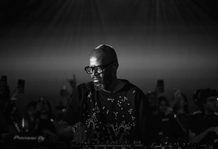
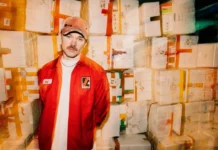
We sat down with one of the most promising stars of Afro/Melodic House for a chat.
There are some people who you just know are going to run their corners of the world one day. Such is the case with Orsay. At just 26 years old and already named a Beatport Artist To Watch, for Orsay, music has been a lifelong discipline. Classically trained on the piano since the age of six and educated at a music conservatory, he positions himself right at the seam of classical sensibility and surgical dance floor momentum.
This sound has taken him to key European clubbing destinations—including Ibiza, London, Madrid, and Paris—and landed his music on influential imprints like Deep Roots Records and Adriatique’s Siamese. Supported by the likes of WhoMadeWho, RÜFÜS DU SOL, Carlita, and Adriatique themselves, Orsay has reached the ears of many in just a few years since kicking off his Dance journey — including yours, most likely.
With standout tracks being ‘Mind Off’ with WhoMadeWho and Carlita, ‘Magik’ with LUCH and Ajna (BE), and ‘Amado’ with MAXI MERAKI, among many others, he’s just released ‘The Home‘, a lone single out via Abracadabra Music. And we figured this would be the perfect moment to share a chat with Axel, one of those we really like here at EDMTunes. So, enjoy what we circled on!
The Interview
(Please note, the bolded text represents a question, while the paragraph(s) following it represent Orsay’s answers.)
Congratulations on the release of ‘The Home’. What does the song mean to you, both personally and professionally?
It’s a song I made when I was travelling a lot. It was right in the middle of touring a few months ago, spending a lot of time in South America. I found a vocal sample that I really loved with those “Let’s find a home” lyrics. Since I was so far away from home, I actually started the initial idea on a plane. It was really about trying to capture that feeling of constantly being away, never truly being settled, yet still finding a sense of fulfilment and feeling at home anywhere in the world through the people you meet and the experiences you have abroad.
It was my first time playing shows in Colombia, and the local promoters were so welcoming. They told me, “You have a family here now; you can come back whenever you want.” I wanted to capture that warm feeling. That’s why it leans more towards being a more complex, deeper song rather than just a standard club record.
Could you give us a little insight into your favourite part of the production process? Maybe a nerdy studio detail, a specific plugin, or a personal moment?
The fun fact here is that I actually prefer the radio edit I made over the extended mix! When I do extended versions, the purpose is strictly for the club. With radio edits, I try to shape them more into a structured song. Because ‘The Home’ felt so much like a song from the start, I really took my time and struggled to make the arrangement feel complete.
If you listen to the radio edit now, it builds up so naturally. My favourite detail is right at the start: it begins simply with the vocals and the melody, then the bass glides in, and the first drop lands you straight into the core of the production. I loved working on those guitars as well.
That might be the first time I’ve ever heard a producer say they prefer the radio edit over the extended mix!
It’s never happened to me before! I think most artists dislike trimming down what they’ve created just to make it fit streaming platform algorithms. But in this particular case, I thought, “Wow, I actually really prefer the radio edit.” It just flows so much better.
Since you wrote this track on the road, I assume you road-tested various iterations during your sets. How much did you feed off the crowd’s energy to refine the final master?
100%. With every track I produce, even if I know it’s technically finished, I always road-test it in my sets. The best feedback you can ever receive is seeing how a live audience reacts. The very first time I tested ‘The Home’ was back in January during the X show with Adriatique in Tulum. It was a massive stage, but I felt the track fit the atmosphere. I was playing an opening slot, so the pace was a bit slower.

In that first version, the breakdown was quite short. Seeing the crowd’s reaction made me realise I could build the tension even further. Three days after returning from the trip, I sat at my computer and extended the breakdown by 32 bars to build it up properly before the drop. Road-testing it made a huge difference.
Touring as much as you do gives you a front-row seat to different crowd dynamics. Touching on a slightly controversial topic: where do you stand on the phone debate on the dance floor? Are you for or against them?
I’m actually pro-phones, for two main reasons. Firstly, while I understand the argument that people should stay in the moment and enjoy the party without filming, many fans don’t have the financial means to buy tickets and travel to experience these shows in person. People sharing clips on social media has helped the entire electronic scene grow exponentially. Take Afterlife, for example—the visual spectacle being filmed and shared online elevated the events into a whole new dimension. If you see a video of me performing in Barcelona and you live in Chile, it allows you to feel connected to that moment even if you couldn’t be there in person.
As long as it isn’t excessive or stopping people from dancing altogether, I think it’s fine. Plus, as a DJ, when you look out and see everyone pulling their phones out to record a track, it’s an immediate metric telling you, “Okay, this record is really landing.” You just have to find the right balance.
As a fan, I completely get that. When I first started going to events, I filmed everything because I didn’t get out much. Now I’m a bit more relaxed, but I see both sides.
Yeah, it’s only really an issue when people stop moving entirely. But overall, it’s a great gauge for us in the booth.
You’ve built impressive momentum in a relatively short space of time. Looking back, who or what kickstarted your journey and inspired you to become a producer?
I’ve been doing music since I was five years old, studying piano and attending a music conservatory, so I’ve always had a strong musical foundation. But it was all classical training, nothing to do with electronic music. I only truly dived into electronic music when I moved to London in 2019 at 19 years old.
The club that completely shaped me was Printworks, which unfortunately has closed down now. I have a vivid memory of an Afterlife party there back when it was just the floating man figure hanging from the ceiling—no massive visuals, just incredible energy. I walked out of Printworks that night thinking, “I want to do this with my life, 100%.” London as a city really built my musical identity through venues like Fabric, Printworks, and Koko. Experiencing those lineups introduced me to so many influences. Bands like WhoMadeWho and RÜFÜS DU SOL especially shaped my sound with their indie, slightly rock-infused approach to electronic music.
You can definitely hear those indie, laid-back influences on ‘The Home’. It feels like a track that could close a set, but works just as well when you’re relaxing.
Exactly. The way I produce is binary: either I go full club mode to make people dance hard, or I go for a very melodic, mellow atmosphere. I try to balance both in my discography so that if I want to play a heavy club set, I can, but if someone wants to listen to my music in the car or at a beach club, it fits seamlessly.
What is one standout memory from your career so far—a moment where something that once felt impossible suddenly became a reality?
My most defining “wow” moment happened about a month and a half after I first started producing. I was in Ibiza and met Adriatique two days before they played DC10 for their own all-night-long show. They invited me on stage because they were playing one of the very first tracks I ever produced, ‘Amado’.

Having artists I admired invite me on stage so early in my career, in an institution like DC10, was an unmatched feeling of fulfilment. I remember sitting on a bench in the smoking area afterwards thinking, “What on earth just happened?” Seeing your music played for a crowd like that for the very first time gives you an incredible rush.
Playing for 15,000 people at a Black Coffee show recently was another surreal, stadium-sized adrenaline rush, but that early DC10 memory will always stay with me.
Who would be your absolute dream collaborator?
Unrealistically, I would love to work with The xx. Their track ‘Intro’ is one of my favourite records of all time. I don’t think it would ever happen because they rarely do those types of dance collaborations, but that would be the absolute peak for me.
More realistically, working with WhoMadeWho was a massive goal of mine, and I was fortunate enough to make that happen recently. Right now, I love chasing collaborations with artists whose sound design I genuinely admire—for example, we just finished a collaboration with Tripolism a couple of weeks ago. I love blending my identity with theirs.
On the topic of sharing the booth, are you a fan of B2B sets? Who would be on your bucket list to play alongside?
I love B2Bs because they go one of two ways: either it’s a difficult experience because the synergy isn’t there, or it’s absolutely magical. My ultimate dream B2B would probably be playing alongside Solomun at Pacha Ibiza, sharing the booth with one of the absolute GOATs of our scene.
What’s your perspective on full-length albums today, both artistically and as a marketing tool in what seems to be quite a single-driven industry?
I definitely want to make an album at some stage, but timing is everything. It’s true that consumer habits have shifted toward quick single releases, and people don’t always take the time to digest a full album.
To me, an album has to tell a complete story. Putting ten unrelated singles together and calling it an album isn’t very compelling. But when you build a cohesive 10-to-12-track project—complete with short intro interludes that transition smoothly into full tracks—it becomes a piece of art. At this point in my career, I don’t feel my artist footprint is mature enough to deliver the message I’d want an album to carry. I’d rather wait, release more EPs and singles, and approach a full-length album when the timing and story align properly.
Do you have a personal favourite album of all time?
The White Album by The Beatles. I’ve listened to it so many times—it’s easily one of my favourite records ever made.
Thank you. And finally, if you weren’t in the music industry today, what career path do you think you would have followed?
Before transitioning to music full-time, I worked in finance, though I definitely wouldn’t go back to that!
My family owns restaurants in Paris, so I grew up surrounded by food and hospitality. If I weren’t a producer, I would definitely be working in the restaurant industry. Music and hospitality share a lot of the same core skills—creating experiences for people. It’s a huge passion of mine. That, or tennis, though it’s a bit too late for me to turn professional on the court!
Was it difficult to transition your daily routine from the corporate world into being an independent producer?
My path into music was quite specific. Three years ago, while I was still working in finance, I lost my father. I had always harboured this dream of pursuing music, and losing him was the catalyst that made me realise I had to just go for it. When you have a corporate job, you have security that disappears the moment you become an independent artist. I told myself to take one year to give it everything I had.
To pay my rent after stepping away from a comfortable banking salary in London, I took on two club residencies as a DJ. Then, I applied my corporate discipline directly to learning production on Ableton. I kept my exact office hours—9:00 AM to 8:00 PM, Monday to Friday—sitting at my desk learning how to produce electronic music, and then DJing in clubs on Friday and Saturday nights.
That discipline is how I built the foundation of my career.
That’s an incredible story of dedication.
Everyone has their own reasons for making a drastic life pivot. I wouldn’t trade it for anything; it was the best move I ever made.
When I produced ‘Amado’, the initial vocal was actually the final voice note my dad ever left me. I built the entire production around his voice before replacing the vocal, collaborating with Maxi Meraki, and signing it to Adriatique’s Siamese imprint. Everything moved so quickly from that point onward. Now, we’re building the project intentionally with every release, and hopefully, in a year and a half or two years, you’ll be listening to my debut album!
That would be fantastic! Thank you so much for taking the time to chat.
It was a real pleasure meeting you, mate. Hopefully, I’ll see you on the dance floor soon!
-End of interview-
Final Words
Thank you Orsay for this great interview. Time to slip it: we’ve been following him ever since the release of ‘Amado’, and this guy seems to forget where the brake pedal is. He just keeps growing and growing. We wish him all the best. Orsay’s newly-released ‘The Home’ is out now on Abracadabra. Buy / Stream at https://fanlink.tv/thehome.