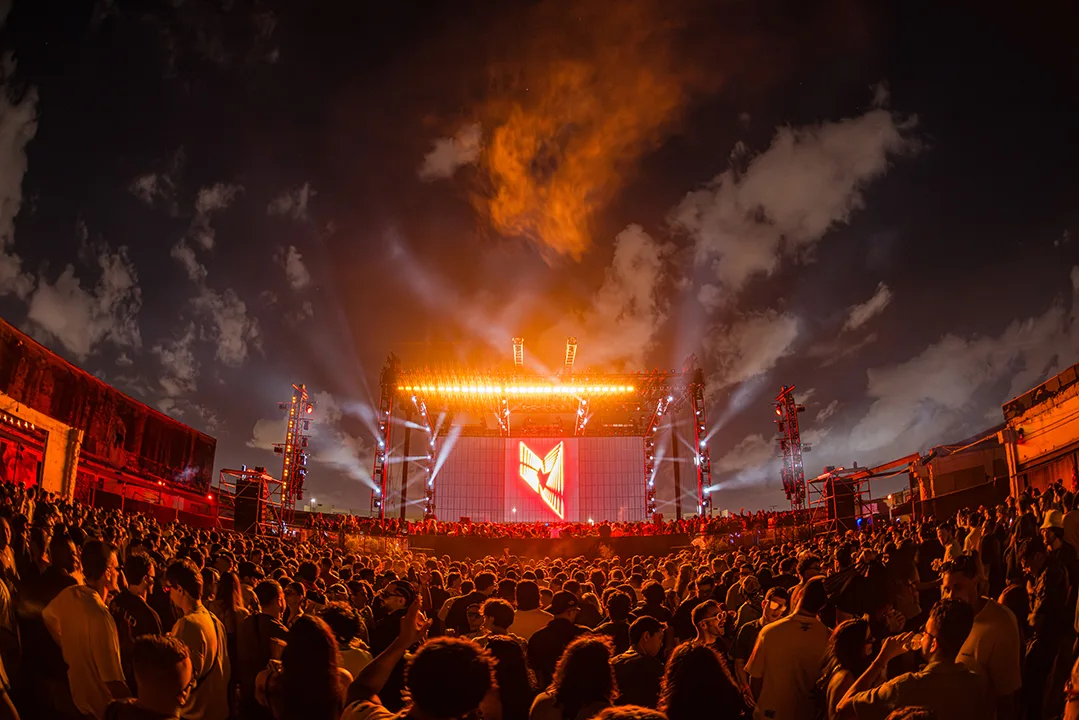
The ongoing legal dispute between Miami’s Club Space and Factory Town operators and Insomniac has moved on to another phase. This week, the team frequently associated with popular venues, SDC Holdings, and its principals, David Sinopoli, Davide Danese, and Jose “Coloma” Cano filed a counterclaim against Insomniac and its CEO Pasquale Rotella in the U.S. District Court for the Southern District of Florida. Additionally, internal documents indicate that Space and Jose Coloma Cano have parted ways, which we can only assume is related to the ongoing dispute.

The counterclaim comes in response to a lawsuit Insomniac filed on August 4, accusing CDD of breach of contract and bad faith during negotiations over a stake in the Factory Town property. At the center of the dispute is a mediated settlement agreement the parties reached in July after a 16-hour long session with Judge Michael Hanzman. That agreement required both sides to collaborate on two upcoming Factory Town events: the Halloween-season Hocus Pocus festival and a show planned for Miami Art Basel.
The initial lawsuit, filed by Insomniac, claims that its former partners at CDD made “outrageous demands” last year for a larger share of money and control over Factory Town.
However, a countersuit from CDD tells a story of betrayal. They allege that Insomniac “methodically and unilaterally” worked to dismantle CDD’s financial and ownership rights. The ultimate aim, they claim, was to leave the promoters “trapped and forced to accept ever-worsening conditions.”
According to CDD, their original agreement for the Factory Town venue explicitly promised them a 49% ownership stake. Their counterclaim argues that this promise was never genuine:
“Insomniac’s and Rotella’s actual intent was to gain full control of the Factory Town venue, obtain a lease for the Factory Town property under only Insomniac’s name, and then unilaterally rewrite the deal under which the CDD Parties had performed and under which the CDD Parties exceeded all expectations, leaving the CDD Parties with all the work, all the risk, and a drastically reduced upside.”
This past summer, the two sides entered mediation and appeared to find a resolution. They emerged with a settlement agreement in which Insomniac would buy out CDD for $3 million and assume complete control of Factory Town. But the truce didn’t last. A new lawsuit from Insomniac alleges that CDD has already breached the settlement by interfering with the planning of major upcoming events, including the Hocus Pocus Halloween party and programming for Art Basel Miami in December.
Once again, CDD’s countersuit offers a conflicting narrative. They contend that the settlement actually required Insomniac to collaborate with them on both Hocus Pocus and Art Basel. They accuse Insomniac of violating the deal by booking talent without their approval and ignoring a flood of emails, copies of which were submitted as evidence in the suit.
As a prime example of this alleged breach, CDD points to an offer Insomniac made to the popular party brand Circoloco, which “represented a 44% increase from the prior year’s deal.” CDD says they immediately objected to the costly offer, stating that it did “not reflect historical performance, venue capacity, or the reality of our shared structure.” The countersuit alleges that Insomniac simply ignored their follow-up emails (which were attached to the Counterclaim) regarding the details of the deal, moving forward without their input.
The dispute has also turned personal regarding Pasquale Rotella, the CEO and face of Insomniac. Insomniac’s lawsuit alleges that the CDD partners had been planning a “smear campaign” against its chief executive. An insider close to the situation speaking anonymously stated, “Pasquale has dedicated his life to advancing the electronic dance music community, supporting independent promoters, fostering underground culture, and building a global movement through the decades without institutional or financial backing. Club Space, it has been successful and will continue to grow under Insomniac’s leadership.”
While CDD’s legal team denies this specific charge, their own court filings contain some of the most blistering language in the dispute. After mentioning the world-famous entrepreneur’s past run-ins with the law, the complaint states:
“Rotella is not just a criminal and a fraud. He is also insufferable to work with. The CDD Parties have had the misfortune of witnessing and experiencing first-hand Rotella’s cruelty, self-centeredness, and volatility towards his business partners and/or employees.”
CCD’s attorney, Bruce A. Weil, offered the following statement to EDMTunes: “Coloma, David, and Davide (CDD) have established themselves as respected and valuable members of Miami’s community through years of supporting local artists and boosting the local economy through the creation, management, and operation of several high-profile dance music venues, Club Space, Factory Town, and III Points, among them. It is disappointing that Pasquale Rotella and Insomniac are manipulating the facts by accusing CDD of the exact misconduct they themselves have inflicted, while retaliating against Club Space by attempting to obstruct and undermine CDD’s ability to operate and manage it during a period of unprecedented success.”
Industry insiders familiar with the dispute have indicated that the conflict extends beyond just Factory Town and reflects a broader fear about Insomniac’s market dominance, fearing that Insomniac is becoming monopolistic and killing competition to block out independent promoters in key markets.
In addition to breach of contract, CDD is pursuing claims of fraudulent inducement, breach of fiduciary duty, unjust enrichment, and quantum meruit, seeking damages for what they describe as Insomniac’s “stonewalling.” Insomniac has pushed back, with attorney Jordan Shaw dismissing the filing as “an ad hominem attack disguised as a pleading.” Shaw argues that CDD’s claims lean on irrelevant personal history including years old social media posts and dropped charges from decades ago rather than the contractual issues at hand.
In response, Insomniac’s attorney, Jordan Shaw, managing partner of Shaw Lewenz in Ft. Lauderdale added, “Their counterclaim is exactly what we expected. The fact that they’re relying on social media posts and dropped charges from 20 years ago, tells you all you need to know about their current claims. The facts are the facts. The Judge Hanzman order attached to the Complaint says what it says. And the Defendants cannot escape those realities, no matter how many irrelevant Twitter posts they cite in their pleading.”
In addition, Insomniac’s Chief Legal Officer, Ian Humphrey added:
“At the end of the day, this is truly sad. Pasquale is a man who gave not only me a chance when I was young, but gave these three men a chance to truly become something, and they did. They took advantage of his goodwill and opportunity and have now chosen to make him the target of their false narrative.
The truth of the matter is, while Pasquale was integral in implementing the vision that led to the success of Club Space, he was not involved with much if any of the allegations in the counterclaim. He sought to distance himself from these individuals once they showed their true colors.
Fortunately, the truth is memorialized in the agreements and writings that support our claims and reject theirs. We look forward to the opportunity to present that to the court and to the community and to continue to uplift the Miami music scene.”
An anonymous source close to the situation tells EDMTunes “the Judge’s order is clear and the facts are consistent that the CDD parties already sold their failing business, took a payout, and are now trying to rewrite history for their own personal gain. These same individuals have a track record of pushing out partners and employees, so it’s interesting they now paint themselves as victims while attacking the very people who saved them.”
Insomniac is seeking the return of a $2.9 million settlement payment and injunctive relief, while the CDD team hopes to establish that Insomniac acted in bad faith and violated binding obligations. Club Space and Factory Town have over the last few years become some of Miami’s most important dance music venues, while Insomniac remains the most influential festival promoter in North America. This legal clash isn’t just about money or contracts. It’s setting a precedent for whether grassroots organizers can coexist with big business in today’s dance music ecosystem. You can read the Counterclaim and its exhibits below.