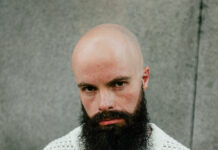
We recently sat down with one of the leaders of the Progressive scene for a chat.
When it comes to Progressive music, a few names come to mind. Among those lies Budakid, a name synonymous with quality, heartfelt music for years. In fact, he’s spent over two decades shaping a deeply personal path in electronic music. His catalogue acts as a personal audio diary, earning releases on imprints connected to Sasha, Solomun, Max Cooper, and Guy J, alongside backing from tastemakers like Adriatique, Hernán Cattáneo, Bonobo, and Dixon.
In 2024, following a transformative period of creative isolation in the Austrian Alps, Budakid launched his independent imprint, Flores. Built on artistic integrity rather than industry trends, Flores serves as a home for both his own DIY output and curated music from close peers. Having played over a thousand shows across the globe, from festival stages like Tomorrowland, ADE, and Sónar to legendary clubbing institutions like Watergate and Paradiso, he continues to balance outstanding output with that human, natural aspect we’ve sadly lost in the Dance space lately.
Flores is, in fact, the home of Budakid’s latest album, Dreams Stretched Beyond. A walk through the unconventional, the raw, and even the new, Kevin’s latest journey is as much of a musical voyage as it is a life-mirroring one. But I’m not going to be the one talking you through it: we’ve had the pleasure of speaking to the man himself for this. We talked about the album, its meaning, Budakid’s life and career, and so much more. Dive in to find out!
The Interview
(Please note, the bolded text represents a question, while the paragraph(s) following it represent Budakid’s answers.)
Congratulations on the release of Dreams Stretched Beyond! It’s been a little over a month since it came out now, so we’d love to know your general balance of this time—how has the public reception been, what comments have you received, and how are you feeling about the overall response?
I’ve been making music for a very long time, 20 years in fact, and I’ve had several attempts at making an album. Every single time, I’d hit around the 80% mark, and at a certain point, it just wouldn’t click. I’d think, “Shit, what do I do?“, and I’d end up releasing everything as separate pieces and moving forward. But this time was completely different. It felt like people were almost expecting an album, and it feels like an “album time” in music right now with so many artists putting out full-length records.

People have been very surprised because the record shows so many different sides of who I am. Historically, I always tried to keep Budakid strictly as instrumental electronic music, mostly without vocals or singing. Over the last few years, I began experimenting more with singing and expanding those borders. It was an adventure in reinventing myself, asking who I am as a human being and what I stand for. I handled the vocals, played bass guitar, and did everything myself. I think people didn’t expect such an intensive DIY project. I even released it on my own imprint, Flores, specifically so I could retain 100% creative control over the entire package—not just the tracks, but the visual direction, photo shoots, and press texts too.
The public reactions have been genuinely positive. As for the metrics side, it’s a tricky time in the industry with the rise of AI. I’ve heard that over 50% of the music coming online nowadays is made with AI or partly AI. As an old-fashioned producer—which I definitely consider myself to be—it’s a challenging climate. For me to make a track takes weeks, if not months or years. Fighting against an industry moving at such an artificial, ultra-fast pace is something I’ve reflected on deeply. On the statistical side, some tracks got picked up by algorithms and some didn’t, but for me, it was never purely about metrics. It was a personal journey I wanted to finish from start to end. By the time the package was finalized six months ago, I already felt completely fulfilled. I barely even check my statistics now.
Could you take us back to the beginning of the project? How was the first idea born, and how did it naturally develop into your very first finished debut album?
For a long time, I was genuinely afraid of doing an album. A debut album carries this heavy weight—it represents a definitive statement of what you stand for as an artist, and for almost a decade, I simply wasn’t ready. I was curious, constantly trying out new sounds, and exploring.
Then, two years ago, I moved to a remote place in the mountains in Tirol. When you live in a city, you get so many unconscious triggers and inputs that constantly influence you. But being isolated here in nature for two years without external musical influences forced me to deep dive into my own belief system. I became my own judge, with nobody else to project onto or seek immediate validation from. That was incredibly special because it allowed me to create something far purer and straight from my heart than I ever could have produced before.
It’s something I would recommend to any musician or creative: detach yourself and unplug from the city. Go to a place where there is actually nothing, deep dive into your own belief system, and ask yourself, “What am I, and what do I actually like?” Over those two years, I created around 30 potential tracks without using any external references, and only 10 made the final cut.
Initially, I thought about releasing them as three separate EPs and bundling them together as a big statement. But as the core tracks started leading the way, I realized they shared a cohesive sound, story, and ideology. The album wasn’t made with the rigid intention of “I am going to sit down and make an album.” If I had intentionally forced it, it probably wouldn’t have worked. The album essentially created itself out of my process of self-acceptance.
Could you share a studio detail or personal moment linked to the creation of one of the tracks that really stuck with you throughout the production process?

What I love most about production is the raw writing process—jamming, writing stories, and creating initial vibes. Sometimes I’ll sit at the piano, play a chord progression, and just sing over it as a casual jam for myself. Other times it’s a sequence on a synthesizer.
The most special moment for me in the studio is that exact instant where an idea clicks. It doesn’t happen every day because it depends on multiple aligning factors: your emotional state, your current life situation, and your physical surroundings. But when a draft sticks with me and stays in my head for several days, it’s a natural signal from my gut that I need to move forward and finish it.
Looking at your career as a whole, who or what inspired you to step onto the path of becoming a musician in the first place?
Music was always something playful for me. I never set out with an explicit goal of “I want to be a professional artist.” I just loved making music, and the artist shape naturally formed around that passion over time.
I started out playing drums as a young kid, and I had a small keyboard. One day, my cousin introduced me to a Digital Audio Workstation on a computer and said, “Kev, you can actually play the drums on the computer now.” As a 90s kid who was completely obsessed with technology, something magical clicked in my brain. I immediately deleted all the computer games off my hard drive and replaced them with music software. Instead of playing video games after school, my friends and I would sit around making beats.
Later on, there was a popular Dutch social media platform called Hyves, which was like the Dutch equivalent of Myspace. They launched a tool where you could upload audio clips and tracks directly to your profile. Other Dutch musicians were uploading their tracks, so I started publishing my early music there too. That was the moment the public-facing artist was created, even though at the beginning, I didn’t care about an image or branding at all. It was just a hobby I loved.
Throughout all your years touring and releasing music, what is one stand-out memory that lives in your mind as something truly extraordinary?
Two specific memories immediately pop into my head. The first was getting to play a set on the Great Wall of China, which was an absolutely stunning, once-in-a-lifetime experience.
The second was playing a full moon party in the jungle of Koh Phangan in Thailand about ten years ago. They picked me up from my hotel and drove us for nearly an hour through dense, winding jungle roads up into the hills to reach this totally remote beach setup. I remember sitting in the back of the car joking with another DJ from Berlin, feeling so surreal and excited just driving through a jungle to play music. Those two moments are always right at the top of my mind.
We heard through the grapevine that there might be a remix album for Dreams Stretched Beyond currently in the works. What details can you tease about that project?
I’m honestly amazed by the remixes. I didn’t expect these incredible artists to touch the tracks I laid down on the album, so I’m deeply grateful for the twists they’ve given them.
The roster consists mostly of artists and DJs I’ve personally crossed paths with or who inspired me on my journey up to this point—people whose records I’ve listened to on repeat at home, artists I respect immensely, or peers I’ve worked with for years. I can’t drop specific names just yet, but some acts will be a huge surprise, while others will feel very obvious because of our history together.
Having complete creative control through Flores meant the curation had to mean something personal to me. It wasn’t about asking, “Who has the most streams or the biggest social media reach right now?” It was about asking, “Who genuinely means something to me musically?” For example, I went to a festival last year and saw a set by one of the remixers. It was one of the best sets I’d heard in years—the music touched me so deeply that I went on a complete deep dive into his catalog afterwards. Asking him to remix a track felt like a beautiful, full-circle moment.
It’s really refreshing how much emphasis you place on personal meaning. Releasing through your own label clearly gives you the freedom to make those decisions without interference.
Absolutely, and that’s how I always wanted it to be. That freedom is probably the main reason I was able to finally release an album now. I can stand 100% behind the entire expression—from the music down to the cover artwork, press releases, and photo shoots.
Learning to be that convinced of myself and what I stand for is the biggest lesson I learned during my two years of isolation in Tirol. I became brave enough to say, “F*ck it, this is who I am. Take it or leave it, I’m making the music exactly how I like it.”

You mentioned living in Tirol before recently moving back to Berlin, and you’ve been living in many places aside from those two. Could you give us a summary of how these different places impacted your life and musical outlook?
I grew up in a small town in the Netherlands called Grave, right near the German border, and lived there until I was 18. At the time, Europe felt huge to me, I had only ever traveled to Spain once. Then, during my graphic design studies, my school asked if I wanted to do an internship abroad in Bangkok. My English wasn’t very good at the time, but I thought, “Yolo, let’s go.” Experiencing a massive metropolis like Bangkok alone at 18 completely blew my world open.
After returning, I moved to Tilburg in the south of the Netherlands to study at the music conservatory for four years. Before that, I was working full-time as a 21-year-old graphic designer in an office sitting with 35- and 40-year-olds. I felt completely misplaced and realized I wasn’t ready for a standard corporate life. I wanted to invest time into music, so enrolling in a four-year degree allowed me to dive deep, study theory and production, and log thousands of hours honing my craft.
I actually graduated cum laude with a 9.5 out of 10! Red Bull Music Academy even invited me to record a session at their studios, but I turned it down because I honestly didn’t feel artistically ready yet. Sometimes I still reflect on that decision, sometimes I regret it too, but I think it was wise for where I was mentally at 25.
After graduating, I realized living in Amsterdam would be financially tough, whereas Berlin was far more accessible, affordable, and had a huge resonance with my sound. A friend texted me saying she had a free room in her student flat in Berlin, so 10 years ago, I moved my creative space. I lived in Berlin for eight years before my partner and I decided to move for some time to Tirol, which happened two years ago.
Touring constantly keeps your nervous system on high alert, and coming home to a busy city meant I could never fully unwind. Moving to nature allowed me to step off the wheel. But after two years in quiet isolation, we felt our story there was complete and we craved a social life again. Last winter, we moved partly back to Berlin. Being isolated made me realize just how much I value active social connections and seeing my friends regularly.
That contrast is fascinating. People often assume club producers need to live in the middle of constant nightlife stimuli 24/7, but stepping back seems crucial for processing those experiences.
Exactly. At one point in Berlin, I was out at clubs every single weekend, eager to explore new artists and support colleagues and friends. But I view life as a metaphorical backpack. Every experience, party, or travel memory gets tossed into that backpack. If you keep stuffing it without stopping, it overfills.
Sometimes you have to stand still, unpack those memories, and properly process and reflect on them. Reflection is an essential part of the creative journey. If you only move forward at full speed without looking back rationally, you burn out.
If you could collaborate with anyone—unrealistically or realistically—who would be your ultimate dream collaborator?
My personal musical taste spans a wide spectrum outside electronic music—I listen to stuff like Scandinavian jazz, surf rock, and Australian psychedelic rock. But my absolute biggest dream collaborator would be Thom Yorke.
It’s not even about his fame; it’s about his philosophy, his theoretical mind, and his raw approach to creation. Honestly, I wouldn’t even need to collaborate—I would happily just sit in a studio corner and watch him work his process. Radiohead has been a constant soundtrack on my life journey for as long as I can remember.
What are your top favourite albums of all time—the records you constantly return to?
Caribou’s Swim from 2010 is an album I’ve listened to for almost half my life—I know every detail so well I can replay it in my head on command. Radiohead’s In Rainbows is another massive favourite. Most Radiohead records, mind you.
Tycho’s album Dive was also huge for me because it combined atmospheric electronics with live guitars in a way that bridged two worlds seamlessly. Outside Dance music, I listen to a UK band called Headache. It’s spoken-word over breakbeats, delivered in a goofy, philosophical way. It’s almost like meditation for me—it completely turns off my overthinking brain and puts me into a dream state.
If you weren’t working in the music industry today, what other career path could you see yourself following?
My dad was a painter and graphic designer, and half my family works in design, so visual thinking was taught to me from a very young age. While I enjoyed design, working for corporate clients means constantly following someone else’s rigid rules regarding page counts and colour formats. I prefer expressing my own philosophy rather than executing someone else’s brief.
My other true passion from a very young age is food, I’m a complete food head! I actually considered starting a culinary blog while touring the world to document all the incredible dishes I was served. Becoming a chef would definitely be my alternative path.
Cooking and making music share the exact same creative DNA. In both crafts, you take a few raw ingredients and combine them based on personal taste: you add extra salt if you want it more savory, or you add extra drums if you want the track punchier. You are taking basic elements and constructing something complete for human senses—one for the ear, one for the mouth.

Finally, what piece of advice would you offer to a young, emerging producer starting out on their journey today?
My primary advice is to focus entirely on the joy of creating and remaining curious. Do what you love doing, regardless of whether it brings commercial success. Some people love going fishing every weekend even if they have zero intention of becoming a professional fisherman. That’s how I approach music—it keeps me curious and keeps my soul fulfilled long-term. Success can be a lovely byproduct of your passion, but it should never be the primary goal.
Secondly, do not be afraid to be unique. Nowadays, young artists go on social media, see someone having success with a specific sound, and immediately try to copy it to achieve the same result. But to build a lasting, meaningful body of work, you have to stand against hypes and explore uncharted ground. Embrace your own self-expression rather than mimicking someone else’s. Skill, patience, and authentic identity will always outlast trends and shortcuts.
-End of interview-
Final Words
Thank you so much to Budakid and the team who made this interview possible. It’s always great to hear insights, reflections, realisations and stories from those artists who lead and rock a certain angle in music. And this talk was nothing short of outstanding for the level of depth Kevin and I achieved. He’s a really good lad.
Listen to Dreams Stretched Beyond, Budakid’s latest long-play, below. And stay put for remixes coming very soon.